Category: Medical Diet & nutrition

  • Home
  • Category: Medical Diet & nutrition

Uganda, struggling to buy COVID-19 vaccines, splashes on new vehicles for lawmakers

KAMPALA, July 23 (Reuters) – Uganda has spent over $30.2 million on buying new vehicles for lawmakers, a move that has been slammed by critics who depict it as profligacy in a country struggling to buy vaccines to stem a second wave of the COVID-19 pandemic.

Parliament released the money to members to buy new vehicles this week and each lawmaker was given 200 million shillings ($56,500), parliament’s spokesperson, Chris Obore told Reuters.

Uganda has 529 members of parliament (MPs).

“MPs must do work, transport is part of the facilitation for them to do their work. They need to check on their constituencies, if they don’t have vehicles, how will they do it?,” he said.

Since late May, Uganda has been gripped by a second wave of the coronavirus, fanned by the Delta variant.

A spike in cases overwhelmed hospitals and triggered shortages of key facilities including oxygen, beds and personal protective equipment like masks and hazardous material suits.

President Yoweri Museveni,76, ordered a lockdown that included shuttering of schools, all businesses except the most essential and bans on vehicular movement.

The government has so far failed to purchase any vaccines, with officials saying the country had been priced out of the market by richer buyers like the West.

Slightly over a million people have received a jab, all from donated shipments, out of a population of 41 million.

“The money would have been used to plan towards re-opening the country and the only way to prepare for re-opening is vaccination,” said Mukuzi Muhereza, secretary general of Uganda Medical Association, a national umbrella body for all health workers.

“We see urgency in solving politicians’ problems but no urgency in funding medical emergencies.”

Uganda so far has recorded a total of 91,355 cases of COVID-19 and 2,483 deaths, latest data from the health ministry shows.

The opposition and civil society have in the past criticised the government for splashing on things like a lavish swearing ceremony for Museveni in May while failing to procure vaccines or buy food for vulnerable groups hit by the lockdown.

“The extravagance on vehicles at such a time is a disaster,” said Harold Kaija, an official at Forum for Democratic Change, one of the country’s biggest opposition parties.
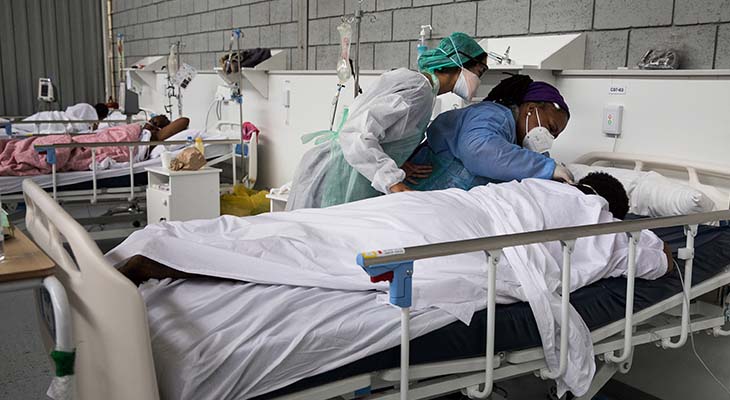

Young People Make Up Biggest Group of Newly Hospitalized COVID-19 Patients

COVID-19 variants are now surging across the United States — especially the highly transmissible Delta variant, which accounts for the vast majority of cases.

Vaccinations for COVID-19 have also decreased with an average of around 750,000 vaccinations daily this week compared to over 3.9 million at the peak of vaccination. About 69 percent of U.S. adults currently have at least one vaccine dose. Demographically, people over age 65 have a much higher vaccination rate, with over 89 percent having at least one dose.

During the start of the pandemic, before there was a vaccine, those most likely to be hospitalized for COVID-19 were older adults.

Now that the Delta variant is spreading widely in the United States, physicians are seeing a worrying trend of younger people ending up in the ICU.

Younger people most affected

According to Centers for Disease Control and Prevention (CDC) data, recent weeks have shown an increase in COVID-19-related hospitalizations for all age groups, with hospitalized adults ages 18–49 accounting for the largest increase.

The dramatic increase in cases seems to be related to the more infectious Delta variant.

“The Delta variant comprises well over 80 percent of what is circulating in the U.S.,” Dr. David Hirschwerk, infectious diseases specialist at Northwell Health in New York, told Healthline. “It is likely that Delta will continue to circulate in the fall, but naturally we all will be carefully scanning for the emergence of new variants.”

According to the recent CDC data, in the week ending July 24, people ages 18 to 49 are the largest demographic hospitalized for COVID-19.

This age group is currently affected far more than those ages 50–64 — and significantly more affected than the next oldest group (ages 65 and older), a trend that began in March of this year.

“A major reason for this is that vaccine uptake has been high among those over 65, and this was a group very vulnerable to severe illness,” explained Hirschwerk. “By proportion, fewer patients of more advanced age are currently being hospitalized with COVID.”

He added that the overall prognosis has improved since spring 2020, thanks to mainstays of treatment like supplemental oxygen, blood thinning drugs, and steroids.

“Depending on the severity of illness, some are candidates for other medications that influence the immune system,” he said.

Credit: healthline